
The label’s iconic Vara shoe—born from a mistake nearly 50 years ago—is still crafted by hand at its Italian factory, located just outside of Florence.
STYLED BY Marina Schubert
…
In 1978, a serendipitous mistake in the Ferragamo atelier gave birth to one of fashion’s most enduring symbols. Fiamma Ferragamo, founder Salvatore’s eldest daughter, was developing a new pump for the modern woman—someone who would accept nothing short of a sophisticated, comfortable shoe. The designers began with a proven shoe mold, renowned for its comfort, featuring a low heel and rounded toe, then added a small oval decoration and an improvised bow fashioned from a scrap of grosgrain ribbon found in the workshop.
When the prototype was sent to the model-maker with instructions to craft the bow from the same leather as the upper, something was lost in translation. The bow remained in grosgrain. Rather than correcting the error, Ferragamo recognized its charm. Crowned with a metal plaque engraved with the logo, that accidental detail became the Vara.
…


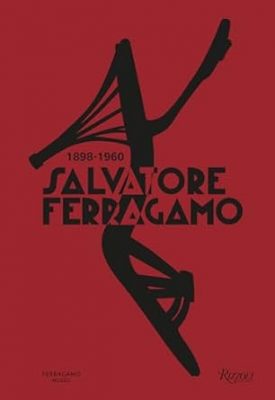
Nearly five decades later, the Vara is still made by hand at what Ferragamo calls its shoe factory—though factory feels like a misnomer. Just outside Florence in Osmannoro, the Ferragamo compound unfolds like a small village. Past a security checkpoint, a winding drive navigates through a maze of buildings before arriving at the Manovia—Shoe Atelier and the Ferragamo Historical Archive. The setting is, simply put, impeccably chic.
Originally founded in 1967, the atelier produces all prototypes, samples, and select shoes for Ferragamo—including the Vara and other icons—maintaining Salvatore’s exacting standards. After a year of extensive renovations, the 64,000-square-foot facility reopened in 2019 as a temple to Italian shoemaking tradition. Glass doors give way to an elegant workshop where craftspeople in crisp white lab coats operate state-of-the-art machinery. Rows of wooden lasts (the 3-D wooden forms, shaped like a foot, around which a shoe is designed and constructed) line the walls like sculpture—each representing a different style, some dating back decades. Spools of thread in every conceivable hue are arranged in pristine ROY G BIV order—a vision of organizational perfection. A crimson stairway ascends to the Ferragamo archive above (a literal stairway to heaven for fashion devotees), while overhead, a spectacular mirrored ceiling pays homage to the famous 1939 platform sandal Salvatore created for Brazilian singer Carmen Miranda.
…

On the atelier floor, time-honored techniques meet modern innovation: craftsmen stretch leather over specialized rollers, cut patterns by hand and laser with surgical precision, and hand-stitch uppers at remarkable speed. Each pair of shoes undergoes multiple inspections before being packaged in its signature red box.
…

Adjacent to the atelier and accessible via the aforementioned stairway, is the Ferragamo Historical Archive—an extraordinary repository spanning 850 linear feet of climate-controlled shelving. Its 719,271 items document the brand’s evolution from Salvatore’s Hollywood years to today. “When I first came to Ferragamo and spent time in the shoe archives, my reaction was, How do we bring back all of these styles?” reflects Maximilian Davis, Ferragamo’s creative director since 2022. “Fourteen thousand pairs of shoes give us endless opportunities to bring back these impeccably crafted models, styles like the Vara that are still perfect for everyday wear.”
…


…

…

…
At 30, Davis speaks the same language as his customer, with an innate grasp of what young women want to wear. Today’s iterations on the Vara—from a classic black Mary Jane to a high-heeled, two-tone sandal—pair seamlessly with his oh-so-cool animal print bags, miniskirt suits, and lace-trimmed slip dresses. But beyond style, the Vara remains proof that Ferragamo has always understood the winning formula: craft plus comfort is what keeps modern women coming back for more.
…
MODEL: Brina Paige Lyon ABC MODELS MILAN
CASTING: Martina Carolina Amadori
HAIR AND MAKEUP: Sara Bergaglio
PRODUCED BY: Pier Guccione Prata
DIGITAL TECH AND LIGHTING ASSISTANT: Fernando J. Avil
…
by Caroline Grosso
______________________________________________________________________________________________________________