
Photo: Launchmetrics Spotlight
…
The “clean girl” is dead, a new citrusy hyperfixation enters the chat and PDRN (a.k.a. salmon sperm) is going global.
To gauge what the industry will be buzzing about in 2026, we consulted beauty experts and trend analysts for their predictions on the biggest emerging trends.
Setting the stage in 2025, we saw an influx of teen- and tween-focused beauty brands popped up to snag Gen Alpha‘s attention. Industry veterans launched new beauty brands in droves (see: Chris McMillan, Hung Vanngo, Alli Webb’s Messy, Mary Phillips’s M.ph), while major acquisitions — like E.l.f. Beauty snagging Hailey Bieber‘s Rhode in a lucrative $1 billion deal and Ulta Beauty adding Space NK to its portfolio — made global headlines. Plus, bananas became beauty’s fruit-of-the-moment, matte lips returned with a 2025 “skinification” facelift and wellness brands peddled “hormone-balancing” solutions.
PDRN Revolution

Photo: Courtesy of Laneige
…
Alongside K-beauty’s global explosion in popularity, Korean skin-care ingredient PDRN went viral for its regenerative, collagen-boosting properties and its…unique origin. PDRN (or polydeoxyribonucleotide) is made from salmon sperm (yes, really), and has rapidly expanded from professional clinics to at-home K-beauty serums that have captured an international following.
“The rise of PDRN from clinic to cabinet is a result of consumers prioritizing longevity-focused beauty and achieving a new high in ingredient literacy,” Sienna Piccoloni, WGSN’s head of beauty, tells Fashionista over email. “In a market where efficacy and speed are everything, PDRN delivers regenerative, clinical-level results without the associated cost, risk or downtime of professional treatments.”
PDRN is poised to further flood the skin-care scene in 2026, as brands turn to it for upping the appeal of sheet masks (Biodance Rejuvenating Caviar PDRN Real Deep Mask), firming toners (Innisfree Retinol Green Tea PDRN Skinbooster Toner), reparative lip balms (Knemo Liplock Jelly Serum), hydrating treatments (Laneige Water Bank Aqua Facial) and soothing serums (CosRX 5 PDRN Collagen Intense Vitalizing Serum). Plus, bioengineered vegan alternatives are becoming more widespread, like in The Inkey List’s PDRN Serum, which is powered by “plant-derived DNA.”
Fauxzempic

Nakery Beauty Lift-Tox Triple-Powered Sculpting Serum, $40, available here
…
Everyone and their mother seems to be using GLP-1s for weight loss, which has led to a dystopian phenomenon called “Ozempic face,” or a noticeable loss of skin elasticity and volume. Now, as the $2 trillion wellness industry continues to boom, consumers are increasingly searching for sculpting and toning skin-care solutions without a GLP-1 prescription or its sagging side effects. Dubbed “Fauxzempic” by Piccoloni, this skin-care trend is grounded in the beauty industry’s shifting emphasis on longevity and holistic health.
“From lymphatic-drainage creams and de-bloat serums to contouring face wraps and tightening tools, this trend signals the rise of beauty products that claim to be side-effect-free and mimic the benefits of injectables,” Piccoloni says. “Body care that lifts and skin care that sculpts, powered by actives, adaptogens and tools.”
Nakery Beauty’s new Lift-Tox Triple-Powered Sculpting Serum encapsulates the main goal of the “Fauxzempic” trend, as its complex formula was designed to visibly lift, tighten and redefine the neck, jawline and face. K-beauty staple Bioheal BOH offers a 3D Lifting Cream for a more contoured complexion; Brazilian body-care brand Gente introduced Lymphatic Drainage Oils for firmer-looking skin; while Kim Kardashian‘s Skims made headlines with its Seamless Sculpt Face Wrap made from “collagen yarns” (…whatever that means). Experts expect to see this burgeoning trend take off even more in the new year.
AI Personalization

Photo: Courtesy of Haut.AI
…
Between ChatGPT’s chokehold on those who can’t write an email by themselves and brands enlisting smart chatbots to churn out product recommendations, AI has become virtually inescapable in today’s digital world. Perhaps I sound like an old man yelling at the clouds, but AI is already revolutionizing product discovery, and the beauty industry is taking note.
In 2026, AI-powered beauty personalization is set to take center stage. “We’re seeing the rise of smart skin-care ecosystems — from at-home devices that analyze hydration and barrier function to AI-assisted platforms that create precision formulations unique to an individual’s skin biology,” Dr. Tiffany Libby, a board-certified dermatologist, shares. “I believe these innovations are driven by consumers’ scientific curiosity, interest in wellness culture and social media‘s obsession with personalization and authenticity.”
The Return of Indie Sleaze Makeup

A look from Isabel Marant Fall 2025
Photo: Launchmetrics Spotlight
…
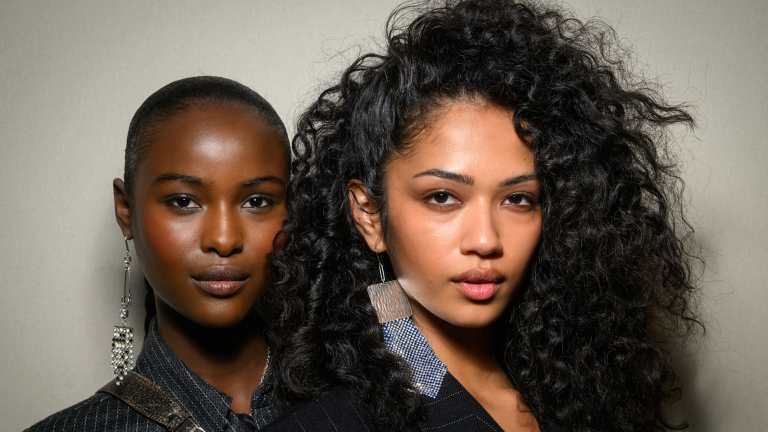
The “clean girl” aesthetic championed by the internet’s favorite trendsetters like Hailey Bieber and Sofia Richie Grainge is (finally) taking a backseat in 2026. Now, the beauty pendulum is swinging back towards maximalist territory, welcoming smoky eyes and rockstar glam in all their “indie sleaze” glory. Trend forecasting agency Trendalytics found that searches for “grunge makeup” are up 21% compared to last year.
“A polished take on grunge has been prevalent across runways like Simkhai, Coach and Isabel Marant from late 2025 into the early 2026 collections,” Kendall Becker, head of trend and editorial strategy at Trendalytics, notes. “Complementing the ready-to-wear, we’ve seen smudged eyeliner, dark eye shadow and undone waves take off within beauty.”
Rebellion is in the air as we head into 2026, as the simultaneous resurgence of ‘90s grunge and 2010s-era indie sleaze (embodied by stars like Jenna Ortega and Billie Eilish) are all about radically embracing perceived “flaws”: smudged liner instead of a single coat of mascara, wispy locks instead of taut slick-backs and blotted-out longwear lip stains instead of precise lip liner. In a beauty world increasingly dominated by filter-perfected and AI-enhanced ideals, it seems consumers and brands alike are craving the authenticity of imperfection.
Star-Led Brands Move Beyond Founder-Centric Branding

Photo: Cindy Ord/Getty Images
…
“Consumers want more than a product — they want a story, a connection, a community,” says Launchmetrics CMO Alison Bringé. “Star-led brands excel at embedding themselves in these highly engaged communities and creating cult-favorite essentials that shoppers willingly invest in, even in uncertain times.”
Even though many celebrity-founded beauty brands are successfully converting fandoms into highly-engaged customer bases, Launchmetrics observed a recent shift of stars gradually moving away from founder-led branding. On average, brand founders have decreased their media impact value (MIV) by 8% year-over-year, according to Launchmetrics’ “The Beauty Industry Growth Playbook.”
Take Rare Beauty, for example: Founder Selena Gomez contributed only 4% of total brand impact in 2025, with her contribution halving between 2023 and 2024. Looking ahead to 2026, the beauty industry will likely see even less content spotlighting star founders as brands try to establish themselves as beauty powerhouses in their own right, not mere reflections of a celebrity’s stardom.
Yes to Yuzu

Hanyul Yuja Brightening Sleeping Mask, $30, available here
Photo: Courtesy of Hanyul
…
In 2025, fruit-forward scents — think bananas, figs and guavas — flooded the fragrance market, but another citrus is ready for its moment in 2026. Yuzu, an East Asian citrus resembling the bright flavor of a grapefruit or a mandarin orange, is commonly used in Japanese and South Korean cuisine and beauty practices. In the words of Osmo Master Perfumer Christophe Laudamiel, yuzu embodies a sense of “optimistic, fizzy freshness.” It’s a note the fragrance industry is leaning into for the coming year.
Byredo recently introduced its Yuzu Tree scent, which emphasizes the fruit’s refreshing, citrusy heart; Japanese fragrance brand Bélair Lab debuted Embracing Yuzu with a hint of grounding green tea; and Sidia’s candle collaboration with Sofie Pavitt Face unveiled The Studio, a refreshing yuzu-centric scent boosted by mandarin and rhubarb. To immerse yourself within the bright citrus note, Laudamiel recommends buying an actual yuzu and smelling it before investing in a yuzu perfume. “Buy with your nose, not your eyes,” he advises.
Yuzu isn’t popping up in the fragrance world exclusively — it’s also a skin- and hair-care staple. “Within skin care, it’s known to brighten, boost collagen and offer an abundance of antioxidants,” Becker shares. For example, the Hanyul Yuja (Korean for “yuzu”) Brightening Sleeping Mask combats uneven complexions, while the Briogeo Style + Treat Hair Styling Sleek Stick taps the antioxidant-rich ingredient to protect hair from environmental aggressors.
“Amongst our set of key influencers, [yuzu has] risen by +155% to last year in conversations online, and brands and retailers have begun to incorporate the trend at a rate of +11% to last year,” Becker adds.
…
_________________________________________________________________________
SWOW SWAG
________________________________________________________________________